If your estimates are inconsistent
Start with the Excel estimating guide, then read the direct vs indirect cost guide, review the template structure, compare it with the worked estimate example and finish with the mistakes guide.
Estimating library
Read practical construction estimating guides on Excel workflows, change order pricing, cost codes, markup, labor burden and the decisions that turn a rough estimate into a more defensible price.
Published guides
Build a practical estimate flow from scope and quantities through direct cost, labor loading, markup, contingency, review and bid output.
Cost structureSeparate direct cost, general conditions, overhead and pricing allowances before markup so the estimate is easier to review and defend.
LaborUnderstand loaded labor cost, billable utilization, markup and the difference between wage and a real recoverable field rate.
RiskKeep uncertainty visible without using contingency to cover missing labor, equipment, overhead or weak scope definition.
MarkupLearn where markup belongs, how it differs from margin, and how to protect price once labor, equipment and contingency are already structured correctly.
Bid presentationScope, exclusions, alternates, schedule assumptions, payment terms and validity language that make the client-facing offer easier to understand.
Worked exampleSee how project setup, direct cost, labor, equipment, contingency and markup flow into a bid-style estimate that can actually be reviewed.
ReviewSpot the recurring estimate gaps that quietly underprice work: underloaded labor, blurred markup, weak exclusions and no true review stop.
Change ordersPrice additional work with clearer direct cost, labor burden, equipment, subcontractor, markup, tax, schedule and documentation logic.
Cost codesUnderstand how cost codes organize estimating, job costing, reporting and estimated-vs-actual comparisons across a project.
Recommended reading paths
Start with the Excel estimating guide, then read the direct vs indirect cost guide, review the template structure, compare it with the worked estimate example and finish with the mistakes guide.
Use the labor burden guide, the markup guide, the markup calculator and the equipment calculator before deciding whether your bid price really recovers cost and overhead.
Read the change order pricing guide, the contingency guide and keep scope, direct cost, schedule effect, exclusions and approval status visible.
Read the contractor bid guide after the estimate is priced so the offer explains scope, exclusions and commercial assumptions more cleanly.
Library roadmap
How to separate job-specific cost, overhead recovery, general conditions and pricing allowances.
Read the cost structure guideMarkup, margin, overhead, contingency and profit explained with examples that connect to bid pricing.
Read the markup guideWhen uncertainty deserves a visible allowance instead of disappearing into markup or padded labor.
Read the contingency guideUse this when labor is still being priced from wage alone and you need a believable loaded rate before markup.
Read the labor burden guideScope, inclusions, exclusions, alternates, schedule assumptions, payment terms and expiration language.
Read the bid guideCommon ways contractors underprice work: missing burden, wrong tax logic, weak quantity basis and hidden equipment cost.
Read the mistakes guideA worked estimate that shows how setup, direct cost, contingency, markup and the final bid summary fit together.
Read the examplePut the guides into practice
The Contractor Estimate Starter Pack turns the guide topics into an editable Excel workflow: setup, estimate lines, labor rates, equipment rates, markup, tax, change orders and client proposal summary.
See the starter pack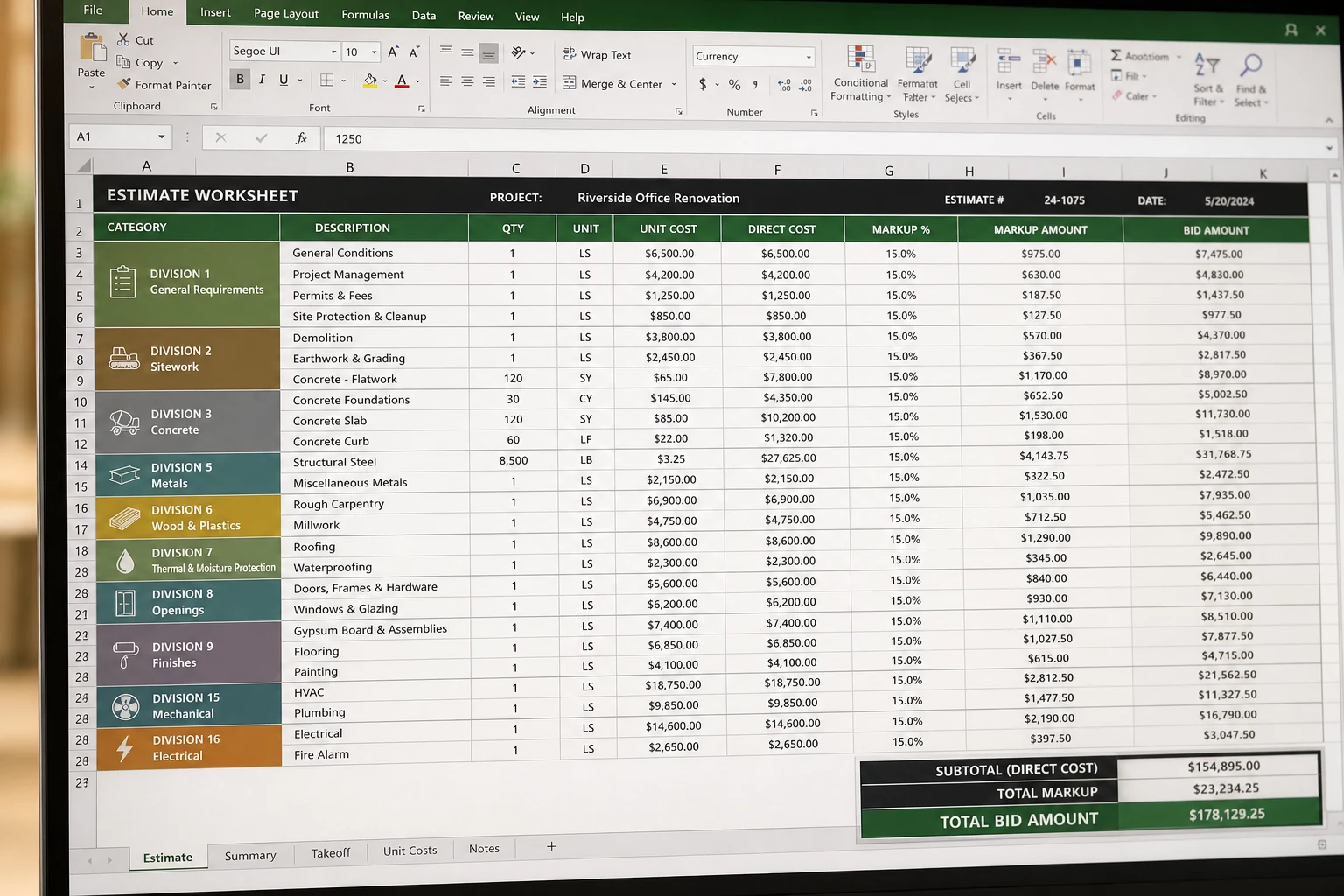
Quality approach
Pages focus on how an estimator uses the concept in a workbook, calculator, bid or change order.
Construction pricing varies by market, trade, contract, tax treatment and company structure, so local review still matters.
Questions, corrections and product support can be sent to hello@buildcostsheets.com or through the contact page.