Should a contractor bid show line-item detail?
Sometimes, but not always. Some clients need a breakdown and others only need a clear scope summary plus total price. The key is clarity, not maximum detail for its own sake.
Bid presentation guide
A strong contractor bid does more than show a number. It shows what is included, what is excluded, how long the price stands, what assumptions were made and what happens next if the client wants to move forward.
A contractor bid is the commercial version of the estimate. Internally, the estimator may work through labor rates, equipment, contingency, markup and review notes. Externally, the client needs a cleaner summary that explains what is being offered and under what assumptions. If you want the reusable structure angle behind that output, use the contractor bid template guide.
A bid should make the price easier to understand without exposing every internal worksheet detail in a confusing way.
| Section | What it should say | Why it matters |
|---|---|---|
| Project and client details | Project name, client name, date, estimate or bid reference. | Keeps the document identifiable and easier to track later. |
| Scope summary | A plain-language description of the work being offered. | Reduces mismatch between the client's expectation and the contractor's intent. |
| Inclusions | Key items that are definitely part of the price. | Helps the client see what the number actually covers. |
| Exclusions | Items outside the price, such as unknown conditions or other trades. | Prevents later arguments over work that was never meant to be included. |
| Price and tax treatment | Lump sum or breakdown, plus whether tax is included or shown separately. | Makes the commercial offer easier to read and harder to misinterpret. |
| Schedule assumptions | Expected duration, lead-time assumptions or access conditions if relevant. | Timing drives cost and should not be left to guesswork. |
| Payment terms | Deposit, progress billing or milestone logic. | Sets expectations before the award stage. |
| Bid validity | Expiration date or pricing validity period. | Protects the contractor from open-ended acceptance after conditions change. |
The bid does not need to repeat the entire internal estimate line by line, but it does need to describe the offered work clearly enough that the client can understand what is being bought. If the scope summary is too short, the number feels arbitrary. If it is too technical, the client may stop reading and assume details that were never promised.
Exclusions are one of the most important parts of a contractor bid. They should not be treated like embarrassing caveats hidden at the bottom. They are a normal part of defining commercial boundaries. Unknown hidden conditions, work by others, permit responsibility, utility shutdowns, owner-provided items and design changes are all examples of issues that may need to be excluded or clarified.
If the client is choosing between materials, finishes or scope levels, alternates should be shown separately. If some item is still provisional, say so. Allowances and alternates make the offer easier to negotiate when they are visible instead of being blended into one lump sum without explanation.
Access hours, mobilization windows, phased work, lead times and sequencing assumptions can all change the price. If the bid depends on those conditions, write them. This matters even more when the estimate includes project-specific indirect cost or contingency that could move if site conditions change.
The bid should state how the contractor expects to be paid and how long the price stands. That does not need to become a full legal contract, but it does need to create a commercial frame. Otherwise clients may assume indefinite validity, different billing timing or a different path to approval than the contractor intended.
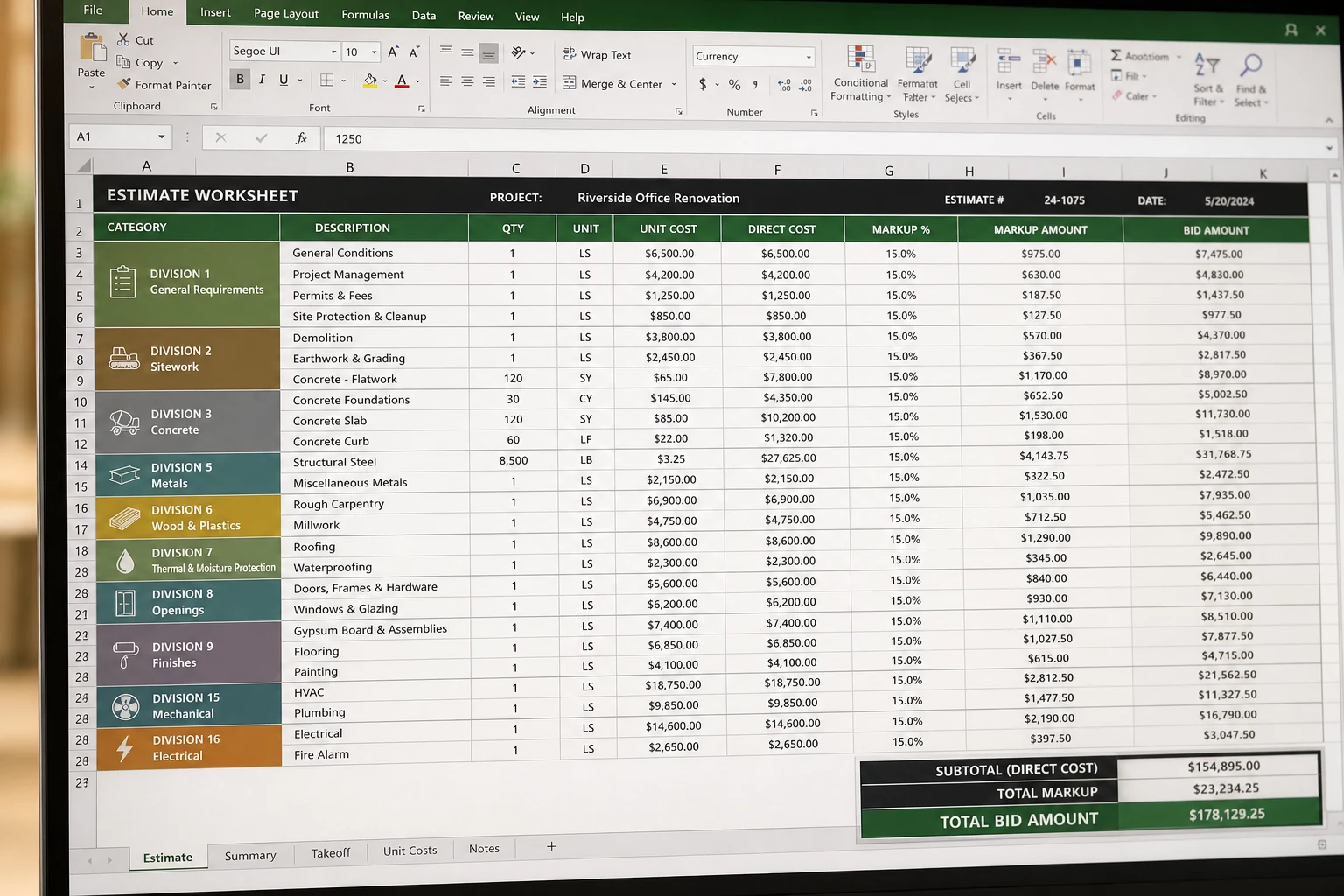
The internal workbook can contain direct-cost build-up, labor burden, general conditions, contingency and markup review. The client-facing bid should be cleaner. It should communicate the offer without making the client parse internal estimating mechanics. That is why many contractors prepare the bid from a separate summary area rather than sending the working sheet itself.
If your internal structure still needs work before that handoff, use the Excel estimating workflow guide, the direct vs indirect cost guide and the markup guide first.
Sometimes, but not always. Some clients need a breakdown and others only need a clear scope summary plus total price. The key is clarity, not maximum detail for its own sake.
Yes, at least clear enough that they cannot be missed. Hidden exclusions create avoidable conflict later.
Yes, as long as the client-facing output is cleaner than the internal working sheet. Many contractors use one file with a separate proposal or summary tab.
Related next steps
Read the estimate workflow guide before polishing the client-facing version.
Use the contingency guide and the markup guide before finalizing the offer.
The Contractor Estimate Starter Pack includes a cleaner proposal path after the internal estimate has been reviewed.
From estimate to offer
The starter pack gives you a repeatable path from estimate build-up to proposal summary, so the bid feels cleaner without losing the underlying logic.
See the starter pack