Editable setup assumptions
Project details, estimate date, tax assumptions, markup targets, contingency and notes should live in one visible place.
Excel estimating templates
This template library explains how construction estimate workbooks should be structured: project setup, line items, cost codes, labor, equipment, markup, tax, change orders, review dashboard and client proposal output.

Template library
Learn the workbook structure contractors should expect: setup tab, estimate sheet, labor rates, equipment rates, dashboard, change orders and proposal output.
TemplateSee what a reusable contractor bid template should contain when the proposal output needs to stay connected to the estimate logic.
TemplateReview the worksheet structure contractors need when extra-work pricing must show scope change, cost buildup, markup, tax and approval status.
TemplateSee the reusable category structure that helps estimate lines, subtotals and workbook review stay consistent across jobs.
WorkbookPaid Excel workbook built as a starter system for project setup, direct costs, rates, markup, tax, change orders and proposal summaries.
WorkflowUse this guide to connect scope, quantities, direct cost, labor loading, markup, contingency and final bid review.
What good templates include
Project details, estimate date, tax assumptions, markup targets, contingency and notes should live in one visible place.
The core estimate should support quantities, units, cost codes, categories, unit costs, totals and sell-price logic.
Rates should be reusable and auditable. The estimator should not bury labor burden or equipment recovery inside one-off line notes.
A contractor needs an internal review view for margin and a cleaner external proposal view for the client.
Current paid product
The starter pack is for contractors who already understand Excel enough to edit a workbook, but want a cleaner estimating baseline than rebuilding tabs, formulas and proposal layouts from scratch.
See workbook details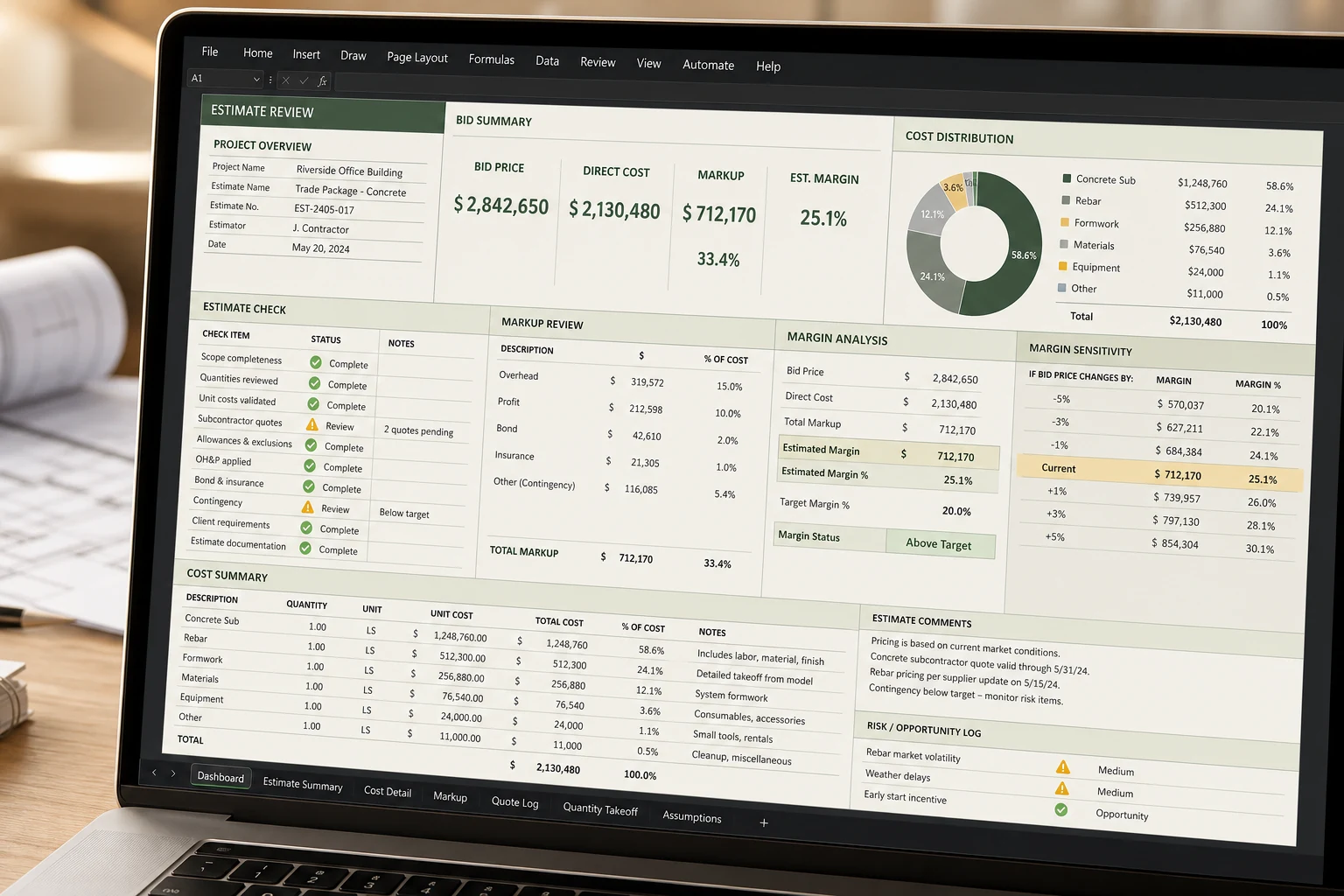
Planned template expansion
Contractor bid template, client proposal format, exclusions, inclusions, validity period and signature-ready summary.
Read the contractor bid template guideBid comparison, subcontractor quote log, material price tracker and estimated-vs-actual job costing sheets.
Read the cost code template guideScope change description, direct cost buildup, markup, tax treatment, schedule effect, approval status and audit trail.
Read the change order template guide